Sunday, January 11, 2015

The Nivelles Story: My Second Peer-Reviewed Paper Makes JAS

I get it. I kind of dropped the ball for, oh, three months. I can't even guarantee that I'm officially picking it back up again today. Last semester was insanely busy and went by before I could blink. I'm happy to report that other than being crazy it went really well for me. I published a book, got a paper out (for which I was lead author), passed my comprehensive exams, and lined up a ton (technical term) of new projects for the Spring. This semester doesn't look like it will be any slower (which isn't a bad thing), so I will try my best to keep up with posts, but please forgive me if I again drop the ball. (I promise to pick it up again when I get the chance!)

Today, I'm going to talk to you a little bit about my latest publication, which was published this month. This paper was quite a doozy! ("Doozy" is defined by Merriam-Webster as: "something that is unusually good, bad, big, severe, etc."... this paper was unusually good, bad, big, and a whole host of other words.)

My involvement with this paper began long after the analyses were complete. The story begins back in 2011, long before I made my way up to Nebraska. Dr. Karl Reinhard's Archaeoparasitology class began analyzing coproites excavated from skeletonized remains resting in Nivelles, Belgium. The coprolites were many, but hailed from only three individuals. These individuals had lived in this part of Europe during the Medieval period, a time notoriously ridden with filth and disease. As one would expect, these individuals were found to have been hosts to parasitic worms, namely Trichuris trichiura (the human whipworm) and Ascaris lumbricoides (the human mawworm or "giant intestinal roundworm"). European archaeoparasitology is known to yield evidence of such worms in great abundance, especially if you go back in time when our understanding of disease was dominated by miasmatism (the belief that diseases were caused by smells and "bad air" rather that pathogens as we know them to be caused by today).

Finding these individuals to be infected with worms was interesting and important, but it was the infections of a particular individual (from Burial 122) that made this study phenomenal. That individual was an elderly woman. Bone pathology reports tell us that she had no teeth and was suffering from arthritis. The coprolites taken from her remains were abnormally large in size and were much more numerous than would typically be found in such contexts. The coprolites were also backed up beyond her sacral region and into her lumbar region. This indicated that she likely suffered from a bowel obstruction or some other issue that led to constipation. This poor woman probably suffered greatly in her final days.

Examination of her coprolites revealed an abnormal amount of wheat glume in her feces. The fiber rife within her could have contributed to the obstruction, but why would she have been eating it in the first place? And why so much of it? As it turns out, this was a way that Medieval doctors sometimes treated people who were burdened by intestinal worms...and this lady had a major problem with worms.

Figure. 9. Average number of eggs per gram as represented by all three burial sites. 
Gray bars represent Trichuris trichiura while black bars represent Ascaris lumbricoides.
[From Racz et al., 2015]

As you can see from the histogram above, this woman suffered from two different types of worms AND suffered an EXTREMELY heavy infection with whipworms. Keep in mind that the above represents average eggs per gram of feces. That's a LOT of freaking whipworm eggs to find in one person. Let's not forget she also had mawworm eggs alongside those whipworm eggs. Here's a table from the paper that will (or at least should) blow your mind.

[From Racz et al., 2015]

Having so many worms in any one of these coprolite is staggering, but remember that all 8 of these coprolites were inside ONE person! If you add up the "eggs per coprolite" values, you get over 200,000 mawworm eggs and over 1.5 million whipworm eggs...again, all inside of the same person. (Seriously, just let that sink in for a moment.) A whipworm infection this bad has never been reported in anyone. This discovery brings our understanding of Medieval filth and disease to a whole new level. 

Additionally, a female whipworm can only lay about 30K-60K eggs a day (depending on your information source). Though we don't know how long these eggs were sitting inside of this severely constipated woman, we do know that she had to have more than a single worm laying eggs. Having a heavy load of whipworms can cause people to have problems like prolapsed rectum and compromised peristaltic activity of the intestines. (Which translates to: your rectum falls out of your butt and your intestines can't push poo out of you anymore because the muscles aren't working right.) The paper concludes that the extreme parasitism was likely affiliated with the cause of death for this woman.

The paper also discussed the importance of looking at parasite egg taphonomy (how things deteriorate or decay over time) and the co-infection of two worm species as it relates to other aspects of European archaeoparasitology.

I officially joined the Nivelles team as a co-author in my second year, though I had heard all about it in my first semester. You see, the manuscript was pieced together from the term projects of four students and introductory material from colleagues in Europe. The lead author had been working on trying to bring everyone's work together, but it still didn't read like it was written by one person. At the suggestion of my major professor, I worked with the lead author to cut, re-write, and otherwise clean up the manuscript so that it was publishable. This took up much more of my time than I had anticipated, but it was worth it once we finally got it submission-ready. In February, 2014, I took the position of corresponding author and pulled the manuscript through the submission process. We submitted to the Journal of Archaeological Science, and we received excellent reviews. After lots and lots of editing, we finally sent back the final proofs in October, 2014. Our paper was set to be published online in November and in print the following January. That's right, from submitting the first time to print publication was almost a full year. (This doesn't even include the time spent editing prior to submission.)

The Moral of the Story
Despite all the headaches, this was such an amazing project to be a part of, even in the later stages. The author line can boast of researchers spanning four countries on three different continents. It involved an undergraduate, two master's students, two PhD students, and senior researchers from multiple universities. It was a really cool thing to be involved in, and I'm very thankful to have been brought on to help. 

We even got some media attention for the work! Check out the article about it here!

Finally, as might become tradition for parasite papers that I publish, here is a title shot for your viewing pleasure. :)

Sunday, October 5, 2014

A Journey into the World of Paleoparasitology: Learning New Things from Old Stuff

Given my research interests, this type of post is LONG overdue. I've decided that I need to do a series of posts about the field of paleoparasitology. Today, I'm going to start with some basic introductory stuff to prepare you for the next few weeks. So, pull up a chair, pour yourself a nice cup of hot tea, and prepare to be amazed by the work of researchers exploring a lost world of parasites.

Introductions
First things first. Let's talk terminology...after all, without understanding the proper technobabble one can't hold a conversation about a given subject. We'll start with an easy one:

Paleoparasitology--This word refers to a subfield of Paleontology that focuses on parasitic organisms of the past and on the relationships of parasites, vectors, and hosts in the past. Goncalves et al. (2003) stated, "Paleoparasitology is the study of parasites in archaeological material." Indeed, the majority of paleoparasitological studies have derived from the use of ancient materials most often obtained via excavation. The word is sometimes used in reference to any such materials, but in 1992 Dr. Karl J. Reinhard (my major professor) called for this term to refer solely to studies of "non-human, paleontological materials". In the same paper, he suggested that the term "archaeoparasitology" be used to describe the analysis of materials from human contexts for evidence of parasitism. 

Ascaris lumbricoides egg
from a Lithuanian mummy.
This brings us to Archaeoparasitology, which you now know refers to the
study of parasites from ancient materials of strictly human origin (e.g. coprolites, latrine sediments, and mummy intestines). This field is specific,
but highly interdisciplinary at the same time. The researchers within this field come from diverse backgrounds as organismal biologists, epidemiologists, ecologists, archaeologists, anthropologists, and paleopathologists, just to name a few. Many of the methods utilized in this field are borrowed from techniques used in other fields, such as veterinary parasitology or palynology.

While we are on the subject: Coprolites, if you don't already know, are desiccated feces.

Also, palynology refers to the study of "palynomorphs", which are tiny things found in air, water, or sediments including things like dinocysts, spores, or the little guys I like known as pollen. This field grew out of geology and is important for lots of reasons, but we will focus on the use of pollen as it relates to diet and environment so that we can tie it in with our understanding of parasitism in antiquity.

A Brief History of Paleoparasitology
The history of this field could fill a week's worth of lectures in a formal class setting (possibly more depending on the professor). I won't go through all of the details, but here's a few of the highlights in a timeline format:

Sir Marc Armand Ruffer, the first person to
describe parasite eggs from archaeological contexts.
~1910--Sir Marc Armand Ruffer publishes his findings of Schistosoma haematobium eggs (that's one of the three species of blood flukes that infect humans) in mummified kidneys from Egyptians dating to the 20th Dynasty (1250-1100 BC). This is the first time anyone had reported parasites from mummies, or any type of archaeological material for that matter.

~1921--Samuel T. Darling published a paper discussing the origins of South American hookworm infections among indigenous peoples based on assumptions regarding prehistoric human migrations.

~1925--Ernest T. Seton publishes On the Study of Scatology in the Journal of Mammology, which was important for demonstrating how fecal shape and content could be used to identify what order of mammal had deposited the material.

~1944--Lothar Szidat reported finding eggs from two geohelminth species (Trichuris trichiura a.k.a. the human whipworm and Ascaris lumbricoides a.k.a. "mawworms") in bog bodies from Prussia.

~1947--Van Cleave and Ross published an important methological paper describing the use of trisodium phospate for the rehydration of coprolites. The use of trisodium phosphate has now been applied to the rehydration of mummified tissues as well.

~1955--E.L. Taylor publishes his discovery of parasitic helminths recovered from a medieval cesspit. He was the first person to examine cesspits from this time period. Many others have followed in his footsteps to give us an exciting look into medieval parasitism.

~1955 & 1960--In two separate publications, Eric Callen and Thomas Cameron improved rehydration techniques. The 1960 article is one of the most frequently cited paleoparasitological papers.

The 1960s and 1970s saw an explosion of highly influential articles published in the field. The time period from 1910 up to the 1970s is often referred to as the "Exploratory Phase" of archaeoparasitology. This phase was followed by the "Population Phase" of the late 1970s through the late 1980s and by the "Synthesis Phase" in during which archaeology fused with parasitological theories. We will talk more about the predominant theoretical constructs of the field in a later post.

An example of an ELISA
(enzyme-linked immunosorbent assay)
used to detect parasite antigens.
The Synthesis Phase of archaeoparasitology was characterized by the integration of methodologies from other disciplines into the field. These borrowed techniques were adapted, reviewed, and refined throughout the 1980s and 1990s to establish methodological standards for studying parasitism via archaeological materials. Sadly, many of these standards have been lost in the influx of poorly-trained new-comers to the field and the well-established and painstakingly tested techniques can be found perverted in contemporary journal articles. Evolution of methods will be the subject of a future post.

With new technological advances in other fields came the application of new techniques in the field of paleoparasitology. The use of molecular techniques stretching from the 1990s onward has opened the door to paleoserology and the study of ancient DNA for looking at parasitism in the past. These topics will also be covered by a future post within this series.

The Big Questions of the Field
Every field has "big questions" associated with it, and paleoparasitology is no different. However, these questions are far broader and vary in their importance based on which researcher you are talking to.

The co-evolution of hosts and parasites is one region with lots of big questions. How long have humans been associated with parasite x? Did dinosaurs have parasites that evolved to parasitize modern archosaurians? Have modern advancements in helminth removal led to over-active immune systems leading to autoimmune diseases?

Tying into co-evolution questions are ecological questions, such as how host associations led to zoonotic infections in the past. ("Zoonosis" refers to a disease passed from animals to humans, e.g. rabies.) How long ago did Toxoplasma gondii establish itself in human populations?

Ecological questions involving humans, in turn, lead to behavioral and cultural questions. How did living in rockshelters and eating woodrats pull humans into the transmission cycle of Trypanosoma cruzi? How did domestication lead to human acquisition of new parasites? How did the diets of early people affect parasitism among populations? How did the lifestyles of hunter-gatherers as compared to agriculturalist predispose these groups to different types of parasites (and vice versa)?

Further branching off of these kinds of questions are questions of what parasitism can tell us about past societies. Was population x dealing with a sanitation crisis? How could a culture living far inland be infected with a parasite associated with marine fish? If parasite x requires conditions a, b, and c, how could population y have ever traveled using route z?

Questions regarding how parasitic infections were recognized, diagnosed, treated, spread, and otherwise dealt with during a variety of time periods at numerous geographic locations are the heart of paleoparasitology. Additional questions about human cultures, societal structures, subsistence patterns, migrational patterns, and trading routes can also be raised when dealing with parasite data.

The Moral of the Story
The field of paleoparasitology has a long and colorful past painted by the adroit work of observant naturalists and archaeologists. As we will learn over the course of the next several weeks, this field is interesting for both what has been discovered and for what is yet to be discovered. I suppose this could be said for any area of science, but it is especially exciting, for me at least, to add a time component to the research of parasitism. The big questions that come up within this field are as diverse as the researchers attempting to address them. The window of the past brings forth a better understanding of things as they were so that we can more efficiently address the nature of things as they are. I hope that over the next several weeks you will join me on this journey into the world of paleoparasitology.

Further Readings
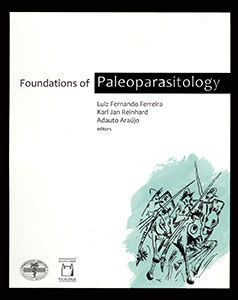
If you are interested in the field of paleoparasitology or any subdiscipline thereof, I would encourage you to purchase this book. It is the best compilation of work in this area. In fact, it won one of Brazil's most natural sciences book awards, the Prêmio Jabuti, or "Tortoise Award." (Which you can learn more about here if you are interested. Also, here is a link to a news release about the book and about the Science Without Borders grant related to the collaborative work of the editors.) I'll be using my copy of this book as a reference for the series of posts relating to this field. (Also, the timeline stemmed from a much more detailed and informative timeline found in the first chapter of this book.)

Additionally, here's a great article published in the special edition 100th volume of the Journal of Parasitology that relates to paleoparasitology. It's a must-read for anyone interested!

Also, here are the citations mentioned in the post above:

Gonçalves, M.L.C., A. Araújo, and L.F. Ferreira (2003) Human intestinal parasites in the past: New findings and a review. Memórias do Instituto Oswaldo Cruz 98(Suppl 1):103-118.

Reinhard, K.J. (1992) Parasitology as an interpretive tool in archaeology. American Antiquity 57(2):231-245.

Sunday, September 21, 2014

Officially an Author (Part II): Announcing My First Scientific Publication

Hey all! Well, it finally happened. After years as a graduate student, I have finally acquired my first piece of "academic currency". I thought it would be good to tell you guys a little bit more about it in this post and then give you a small preview of some other papers that I have in the works. Happy reading! :)

In February of this year, our lab received samples from mummies interred beneath the Dominican Church of the Holy Spirit in Vilinus, Lithuania. These samples represented intestinal, abdominal, and rectal contents from a handful of individual mummies. We analyzed these samples in search of parasites, starches, and pollen grains. The analysis was conducted by myself, my major professor, and a UCARE student whom we lovingly referred to as our "under-grunt". (UCARE is a program through our university that sponsors undergraduate research. It stands for "Undergraduate Creative Activities and Research Experiences".)

By the end of the month, we had not only finished the parasite analysis (the pollen analysis extended for another month or so), but I had also prepared a manuscript for publication regarding our parasite findings. Basically, we had found that one of the ten samples analyzed contained the eggs of both Ascaris lumbricoides (human mawworm) and Trichuris trichiura (human whipworm). These findings were exciting (aside from the fact that we found parasite eggs, which is always a cool thing) because this represented the first report of parasitic geohelminths in mummies from this area dating to this time period (18th-19th century). We also found lots of really cool mites along with their eggs, and we were able to discuss differential preservation of parasite eggs within mummy contexts because we found underdeveloped T. trichiura eggs. The discovery of these underdeveloped eggs coupled with encountering these eggs in groups of 2, 3, or in one case 9, led us to conclude that we had rehydrated material that had once had a female T. trichiura embedded within it. As the gravid (i.e. full of eggs) female decomposed, the eggs preserved inside of the mummy, but were never able to embryonate. This discovery highlights a problem that one only encounters when dealing with mummies as archaeoparasitological analysis of coprolites (desiccated feces) or latrine/privy/sewer/water closet sediments will only yield eggs that are more developmentally advanced because they were passed by the female and subsequently by the depositor of the feces. Hence, people who study mummy parasites must be able to recognize parasite eggs that are underdeveloped in addition to recognizing their fully-developed counterparts.

We sent this paper to our co-authors in Lithuania and everyone gave the manuscript the green light for submission. We chose to submit our paper to the International Journal for Paleopathology (henceforth known as "IJPP"). Before March had even rolled around we were anxiously awaiting reviewer comments. I'll spare you the details of the reviewer comments (both the constructive ones and the ones that merely demonstrated the reviewer's complete lack of familiarity with basic archaeoparasitological methodologies and concepts). The take-home here is that I got my baptism under fire as an author undergoing the peer-review process.

This may have been my first paper, but I wasn't completely naive when it came to the process. I had been told (or more precisely "warned") about how one could receive scathing reviews or about how reviewers weren't always well-suited to critique the work that they were reading. I was prepared to have a thick skin and to take every comment as a device for perfecting our paper. I was prepared to make both minor and major changes and to accept the criticism from people I assumed to be much more experienced than myself. What I was not prepared for were the asinine comments that served no purpose other than to point out "errors" that didn't really exist. I quickly learned that some of the reviewers could in no way be classified as my "peers", much less as experts in the field if they didn't understand some of the most fundamental concepts of the discipline. It was an odd experience, to say the least.

To balance out the oddness, we did have some really great comments from reviewers as well. We were asked to revise and resubmit. (Which is what every author wants to hear!) We made the changes. The paper went from a case study to a brief communication and we dropped all of the information about the mites. (Something for another paper someday.) We re-submitted and after a few weeks, the paper came back with additional reviewer comments and we were asked to make more dramatic changes and to resubmit again. We made said changes, shifting the focus of the article more toward the taphonomic aspects of the paper. We again, resubmitted. We were met with an additional request to revise and resubmit. By the end of it all, we had a very different looking manuscript than we had begun with, but we had a great article that was about to be published, which made all of the hassle worthwhile.

After editorial corrections and approving galley proofs, it finally happened. In August, a whole half of a year after the initial submission, I saw my name as first author on my first ever peer-reviewed scientific article. My first piece of primary literature will forever be cited as "Morrow et al., 2014". That's a good feeling!

The Moral of the Story
Sometime, it's okay to be a "late bloomer" as a scientist. I may not have had a publication as an undergraduate or even as a master's student, but my first one really was special. My first one taught me the skill of navigating the submission process as I was the corresponding author in charge of submission and communication with my co-authors. It taught me the importance of diplomacy and collaboration as I was in charge of coordinating revision efforts. It taught me patience, that the review process takes time whether you spend weeks or years preparing a manuscript. Most importantly, it taught me to handle idiotic comments in tactful, diplomatic language without buckling to the whims of reviewers who are blatantly incorrect in their assertions. (And, of course, it taught me to take constructive criticism...providing that it is, in fact, constructive...and use it as the wet stone to sharpen the blade of an incredible manuscript.) I'm so thankful that this particular experience was my first experience with peer-reviewed publication as bonafide scientist. Here's to many more in my future!

The article can be found online in all of it's full-color glory here if you are interested.


Ha! You thought I forgot about your sneak previews, didn't you! Fear not, faithful readers, for I shall never let you down! I can't disclose much until things actually get published, but here's a few topics covered by some of my "works in progress". In no particular order:

-Lack of parasites from embalming jars containing the remains of members of a very prominent Italian family. [Submitted.]

-Parasites from coprolites out of Medieval burials. [Just resubmitted this one for publication on Friday!

-Insects from an Italian mummy who is now a saint...making the insect remains "holy relics". (True story.) [In revision with co-authors.]

-Pollen/Dietary analysis of Lithuanian mummies. [Working on a manuscript.]

-Parasites from 1,200-1,400 year-old coprolites sealed beneath an adobe floor in a cave in Mexico. [Funding pending.]

-New methods for recovering parasite information from previously un-utilized source materials. [Funding pending.]

-Analyses of mites from European mummies. [Analysis ongoing.]

-Analysis of sediments from a sod house wall. [Analysis scheduled for later this semester.]

-Pollen and possible parasite analysis from a 8,000-9,000 year old Brazilian burial site. [Analysis scheduled for the Spring.]

-An assessment of the efficiency of flotation for pollen recovery out of karstic soils. [Analysis scheduled for the Spring.]

-A comparative review of archaeoparasitiological methods in contemporary literature. [Ongoing work on a manuscript.]

-Lice collected from a pre-clovis cave. [Waiting for samples.]

Sunday, September 14, 2014

Officially an Author (Part I): Announcing My First Scientific Book

Author copies are in, so everything feels very official. My new book has been published since August, but my three complementary author copies just came in early September. I thought it would be good to give a little information about my book for anyone wanting to know more! :)

First of all, the book is titled: The Biology and Identification of the Coccidia (Apicomplexa) of Turtles of the World. This book has been a long time in the making. The back-story for this book begins with a young biologist in her first year of graduate school trying hard to come up with a topic for her thesis. She had her mind made up about becoming a herpetologist (person who studies reptiles and amphibians), but she had a hobby-like fascination with parasites. She did a quick Google Scholar search one day for "reptile parasite" and started sifting through scientific papers. Her eyes were drawn to a paper titled: "Eimeria trachemydis n. sp.(Apicomplexa: Eimeriidae) and other eimerians from the red-eared slider, Trachemys scripta elegans (Reptilia: Testudines), in northcentral Texas". The authors were Steve Upton and Chris McAllister.

As you've probably guessed by now, the woman in the story is, in fact, the woman speaking to you now. My first thought upon seeing this title was, "Okay, I know what apicomplexans are, but what is this weird family?" I read further seeing only morphological terms that were totally Greek to me and finding another then-unfamiliar term...coccidian. I felt overwhelmed and excited and intrigued all at once. These sounded like cool parasites, but just what the heck were they??? Google to the rescue. Before my eyes lay page after page on these amazing little protozoans. I was sold. I would work with turtle parasites for my thesis. The only problems were that we didn't have a herpetologist or a parasitologist at my university!

I eventually put together my thesis proposal and submitted it to my committee for approval. Despite my lack of access to a local an expert in herpetology or in parasitology, my committe approved my project. I planned on collecting red-eared sliders from a university-owned pond, housing them until they pooped, collecting their poop, and looking for these coccidian things in the poop. Simple. Straightforward. All of the other words that wrongfully describe this type of work.

While trying to follow the unfamiliar language and protocols, I came to the realization that I needed help. I looked back at the paper that had made me want to work with these as-of-yet-non-existent parasites. My answer became clear. I wrote to the authors. One of the authors has to this day never responded. The other responded within a day or two of me sending out a cry for help. Dr. Upton was excited and more than willing to help me. He gave me lots of great advice and several tips on how to tweek what I was doing. He also provided me with a few papers to help me along and slowly the project started to come together. I was still having trouble, though, and one day I just stopped hearing from him. I was afraid I had said something wrong or dumb. After a while, I decided to e-mail another name that had popped up on many of the papers I had been reading.

I sent a hopefully-not-transparently-desperate e-mail to Dr. Don Duszynski asking, again, for help. The response I got back was amazing. Duszynski not only answered my questions and helped me a LOT with the project, he also invited me to help him to write a monograph compiling all of the known literature on turtle coccidia. I was astounded. How could this guy, this HUGE name in coccidian biology possibly want me to co-author a book with him? I was a nobody. Unpublished. A very green graduate student. A person who hadn't even heard of a coccidian a year ago. And he wanted me to help?! It was a tremendous honor that I didn't feel I deserved to have. Perhaps that is why he asked in the first place, because he knew I would work hard to make up for my lack of knowledge. Or maybe he just needed someone who could put all the data into a word document so that he didn't have to do anything outside of the interpretive writing. Either way, I was in.

I later learned that Dr. Upton had passed away. I was deeply saddened that I never got to meet him in person, but I was happy to have known him via e-mail. I was so lucky to have had all of his help. He was an incredible person to take the time to help me, especially while knowing he didn't have a lot of time left himself. I will always owe some of my success to him for his guidance in those early stages of my career. I'm so grateful for his kindness and for the passion he had for coccidia.

My thesis work hit many roadblocks, most of which were associated with not having the proper equipment to do what I was looking to do. In order to graduate (though a year later than planned), I had to change my thesis topic. However, I tried in vain to continue the turtle coccidia project as an independent study. I also maintained my correspondences with Don and worked on the turtle coccidia monograph on the side. Despite my change in thesis topic, Don insisted that I accompany him to a parasite conference held an hour from where I lived at the time. "Why not?" I thought.

On a warm, sunny day in April, a vehicle pulled up to a loading dock outside of my university and Don Duszynski met with me for the first time in person after almost a year of e-mails. With him was Dr. George Cain, with whom I quickly bonded over a love for acting and German sausage. (Yeah, we stopped at Fischer's Meat Market in Muenster, Texas on the way...)

After an hour, we arrived at the conference. I remember liking the food, though I can't really remember what exactly I ate that night. Then I stayed up talking and meeting all sorts of new people until the wee hours of the morning. The next day was filled with talks about an amazing array of different parasites. The evening brought a fancy spread of cheeses and a great diversity of wine to enjoy while checking out all of the awesome parasite posters. Later came the business meeting, which marked my first attendance at such a thing. It was again followed by making new friends and conversing with people passionate about parasites until 2 or 3 in the morning.

The last day ended after a few more talks and I left knowing that my application to the University of Texas-Arlington didn't matter anymore. I had been converted from an aspiring herpetologist to an aspiring parasitologist.

It was at that very meeting where I met my now-major professor, Dr. Karl Reinhard, and began thinking about archaeoparasitology as more than just a long, fancy word. I also met others who would go on to serve as members of my committee, Dr. Scott Gardner and Dr. John Janovy.

A year later, when I attended the meeting for the second time, I drove to the conference on my own and had a similarly awesome experience. By that time I had officially been accepted into UNL and would be beginning my PhD program the following fall.

After graduating, getting married, moving to a new state, and beginning my PhD work, it became difficult to focus on finishing the monograph. My co-author's life was equally (if not more so) busy at the time, so we each worked when we could on what we could. After almost four years (almost halfway through my PhD program at this point) we finally managed to pull everything together. I began working on figures and discussion paragraphs that would see numerous (necessary) edits from my co-author. We decided to go with Elsevier as our publisher and the "monograph" became a "book". Before I knew it, I was getting a contract in the mail and scouring each line. My co-author, a man who has written many such books, called me to discuss the contract in detail. It was an incredible learning experience for which I will be eternally grateful.

Just before the final proofs came in, my adviser encouraged me to tell our department about my accomplishment. I wasn't really sure about how to go about "professional bragging", but I did know that this book was going to be important for me to publicize. I asked Patty Swanson, the woman who knows all things (or more precisely one of the many women who know all things in our department...we have great people!), and she put me in touch with our communications associate, Mekita Rivás. I had a wonderful interview with Mekita and she took a few pictures of me next to my favorite microscope (a.k.a. The Beauty). Later, I read the excellent article she wrote for our departmental newsletter. A few friends subsequently posted links to the article on Facebook, which was pretty cool! A week or so later I saw a link to my article pop up on my newsfeed. Thinking it was a little odd, I scrolled back up to find that the story had been picked up by UNL Today and there was my face right on the university's webpage! (Here's a link, if you are interested.)

It was shortly after the interview that we transitioned from calling our work a monograph to calling it a book. (Also, in case you didn't notice, the computer screen behind me is showing a beautiful Ascaris egg from a Lithuanian mummy rather than a coccidian....then again, I'm sure you already knew that!) Later that day I had professors in two of my classes mention that they had seen my article. My Portuguese instructor said I was "famous"...and I certainly felt like a rock star that day!

By mid-summer we had the cover worked out...I posted a copy of it on the bulletin board in the dining hall of the station where I worked. I had a few people express interest and a few congratulate me even though the book wasn't quite finished yet. I was amazed at the support from faculty and students that seemed to be surrounding me. Don't get me wrong, I certainly felt that the book was important, but I was overwhelmed by the number of other people who actually recognized its importance. (There's more parasitophiles out there than I sometimes realize!)

Just before I left the country to do field work in Brazil for the better part of a month, the final proofs were submitted. Once I returned home it was only a matter of days before I realized that it was official. It really was finished. I Googled "Morrow Coccidia" and the first thing that popped up was it. The realization that it had ACTUALLY HAPPENED hit me all at once. I was beyond elated to be able to officially, after all of these years, be able to call myself a real scientist (because real scientists publish) and a real author (...which also have to publish to be real, right?)

It would be several more weeks before my author copies would make their way to my mailbox. I checked everyday (sometimes twice a day out of overzealous anticipation) hoping to find a package with my three copies. They finally arrived while I was out of town for a parasite conference (go figure?!) and my wonderful husband texted me to announce their arrival mere hours after my professor and I had left town. They were the first thing on my mind once I was back home. I already knew where the copies would be going. The first one I opened to page #17 and drew a circle around the page number in sharpie. This was my copy. The second I placed on a shelf to await its new owner. My parents' copy was secured until their arrival this November. I opened the third copy and took out my nice pen. In the open space on the first page I wrote "To the Harold Manter Lab of Parasitology" and then a short message followed by my autograph. Hehe...autograph....that's too cool! :)

And now you know the whole story...or at least my part in the story. I am beholden to Dr. Don Duszynski for taking me, an unheard of graduate student from a tiny university, and teaching me all about writing, editing, editing, and more editing, contract negotiation, cover design, and publishing. It was an honor to work with him as both a friend and a colleague long before I began to build a professional name for myself.

I am beyond humbled by the outpouring of support from my friends, family, and colleagues. I'd especially like to take a moment to thank my close friends who maintained our friendship even when I was too caught up in working on this book to go out for a drink and to those who brought me tea while I sat immersed in a blanket of solitude tapping away at the keyboard. More than anyone, I want to thank my husband for putting up with me when I was stressed or distant in my zone of concentration and for being the most encouraging, reassuring, and inspiring spouse there ever was. (Seriously Love, this would have been tough without you! And also thanks for being my photographer...pictures below!)


Note the awesome "Parasitophile" shirt from this year's
Rocky Mountain Conference of Parasitologists.
(I may have had an influence in designing this shirt...)

Monday, September 8, 2014

A Weekend in Western Nebraska: Attending the Rocky Mountain Conference of Parasitologists

Thursday, Friday, and Saturday of last weekend was a blur of exciting presentations, reunions, new friends, and amazing food. I'm talking, of course, about the recent convening of the Rocky Mountain Conference of Parasitologists (RMCP) held at the Cedar Point Biological Station (CPBS) just outside of Ogallala. This year's conference was small, both in terms of membership and in number of presentations/posters, but it was still a good meeting. Below are the highlights, at least from my perspective.

Thursday
My major professor and I taught the morning's classes and left for RMCP around 1pm. We grabbed Starbucks on the way out and I ate lunch on the road. The four hour drive was filled with wonderful conversations about the semester that lies ahead and with the words of Mitch Albom's The Five People You Meet in Heaven emitted by the CD player of his blue Baja. We grabbed more coffee at our favorite little place in Gothenburg before hitting the last stretch of road to the station.

We were surprised to discover that we were among the first people to arrive for the conference. I took my things to the room where I already knew I was staying and went to see the kitchen staff while my professor got settled in to his cabin. The familiar smell of awesome emanated from the kitchen as soon as I stepped into the dining hall. I was greeted by the smiling faces of two close friends and we chatted until they had to put out the hors d'oeuvres. It is traditional to serve hors d'oeurvres rather than dinner at this conference unlike the other annual conference I attend. I suppose that's due to the later arrival of most attendees. The hors d'oeuvres this year were spectacular. I walked up to the serving bar to see an array of fancy crackers and white cheeses surrounding plump, green grapes. To the right of this was a tray of caprese...little bits of mozzerella, tomato, and a basil leaf skewered on a toothpick and drizzled with balsamic vinegar. Just to the other side of that was a hot pan of Italian meatballs with warm smokes still rising from the freshly cooked delicacies. On an adjacent table lay a round tray of dark chocolate-dipped strawberries. To the left of the strawberries were small gingersnap cookies with vanilla frosting drizzled delicately over them in a zig-zag pattern. As I look at the spread before me, I knew that this was destined to be an awesome weekend! (I apologize in advance for my lack of food-porn from all of the meals this weekend...I will, however, flood you later with pictures of a particularly special dessert!)

Friday
The next morning came early. Breakfast was served at 7am and consisted of sausage, eggs, fruit, pineapple and coconut oatmeal, and peaches and cream french toast. The presentations began at 9am with four excellent graduate students (myself included) delivering their research to an eager and fully-awake audience. My own talk (which you can find here if you so choose) concluded with a long string of questions and was followed by a break during which we got cookies, veggies and hummus, crackers with cheese, and fruit to go with our coffee and/or tea. The next round of talks were comprised of two undergraduate student presentations, one of which had some beautiful SEM and TEM photos. By the time these had finished, it was near noon. Lunch was comprised of beef or veggie enchiladas, cabalcitas, and a freshly made pineapple and black bean salsa. This was, of course, offered with tortilla chips and a diverse salad bar. For dessert, the staff prepared root beer floats and I couldn't stop myself from indulging.

Lunch was followed by a memorial faculty presentation given by my professor (who was also this year's president) who spoke at great length on the subject of archaeoparastology as a discipline. I was super excited about this topic for lots of reasons, but it was amazing to see how entranced the crowd was (well, save for a few parasitologists who were ready to move on to the social hour, it seems) despite his accidental time slot overshoot. Upon learning of his overshoot, my professor had been embarrassed as he hadn't realized he had gone over time. It makes me smile that he was so passionate about his work and so excited to tell others about it that he lost track of time. In talking with other students, we all agreed that we aspire for such passion in our own work as we grow into professionals.

After another break with yummy snacks, we returned to the basement of the lodge for another session of shorter faculty presentations. These were obviously excellent in both their construction and in their content. These presentations were followed by the student poster session held in the adjacent building. There were only three posters, all of them graduate students. My own poster was among them, taking up the least space on the wall, but clade with beautiful photos of Ascaris lumbricoides eggs, malformed Trichuris trichiura eggs, and the lower half of a mummy. (If you are interested, you can get a pdf of the poster here.)

A banquet dinner was served after the poster session. The tables were set with real wine glasses at every center and heavy porcelain plates were waiting to be filled with shrimp scampi (or a vegetarian version...I guess that's just called "scampi"?), a melt-in-your-mouth garlic cheddar biscuit (or 5), and the ever-present salad bar assemblage. It was, however, the dessert that stole the show. Our amazing kitchen manager (/my best friend from college) created chocolate cupcakes with cream cheese frosting. On top of each one was a hand-pipped parasite silhouette made of dark chocolate. They where adorable and perfect. Lots of photos of this perfection follow. 


Parasitophiles, feel free to nerd out right now...


I am hookworm, hear me...Rawr!
Also...so cute! 


Oh no! We are almost out of cupcakes!!! What do we do???


Oh good! Airicca saves the day with more cupcakes!


Protozoan love!
Okay, so it turned out upside down in the photo, but
the one on the left was my cupcake...I <3
Giardia!


 Karl grabbed a tick! And then, he ate it.


 Another great tick shot next to an elegant little cercaria. 


How many can you name?

(Left to right, top to bottom: tick, Trichinella nurse cell, Plasmodium in cell, Trichinella nurse cell, small worm [nematode], 
Plasmodium in cell, hookworm's bucal cavity, 
cercaria, top-view of Schistosoma egg,
small worm [nematode], Giardia, Demodex (follicle mite),
cercaria, Schistosoma egg, mystery top-view.)


Hey look!!! Coccidia!!! Oh, yeah...and other stuff too.

 After dinner, I took my wine glass with me to the basement for the last presentation of the day. This was the second memorial faculty lecture given by a woman who studies the genetic histories of elasmobranch (that's sharks, skates, and rays, if you were wondering) tapeworms. If you've never looked at marine cestodes (tapeworms), google them. Right now. Go on. I'll wait.

Okay...now that you're back...aren't they just amazingly beautiful and complex?! If I wasn't already enamored by archaeoparasitology, I would be looking for any way possible to get into studying these little guys. I mean, WOW! Seriously, I am more and more amazed by them every time I sit through a presentation on this topic. After the presentation came the social hour (or a few) in which we conversed the night away while munching on the vestiges of the day's meals lovingly left out for us late-night snackers. It was a great night filled with great discussions with great people. :)

Saturday
The final day of the conference began early again with a breakfast bar presenting sausage, eggs, blueberries and peaches oatmeal, fruit, and pumpkin french toast. There would be only a single faculty presentation after breakfast, but I was especially excited for it. The topic covered a recent range extension of a coccidian parasite in Eastern box turtles. I was especially excited for this one because I recently co-authored a book about turtle coccidia (find it here) that was finally published last month. (After only 4 years of work! :p) The presenter unexpectedly volunteered me to help answer questions after his talk and even motioned for me to stand up. I did not stand, however, not because I didn't want to, but because I didn't want to do so during the applause he had earned for his presentation and it would have just been weird to stand after everyone stopped, forcing them to question whether they should begin clapping again. As you would expect, he didn't really need my help in answering questions, but I did add in a few additional comments to some of the questions after he was finished talking.

Book at the Sod House Museum
Look! It's by John Carter!
Next, it was upstairs for our last round of snacks and to get prepared for our business meeting. The meeting was quicker than usual. Awards were given out, nominations turned to new officer positions, and the proceedings of past and future meetings were discussed. The meeting concluded with a passing of the gavel from the president and the president-elect. This was ceremoniously passed to the tune of actual bagpipes. This ceremony may or may not have included the skipping of the two presidents down the aisle and back. ;) It was glorious.

With the meeting adjourned, we all loaded up our vehicles and headed out. Some grabbed lunches on the way, while others at the last CPBS lunch of sandwiches and left-over snacks. My professor and I headed back to our Gothenburg coffee shop and made a stop in at the adjacent Sod House Museum before the long drive back home. We spoke of the conference and of future projects for a while, and then we attempted to finish our audiobook. 

The Moral of the Story
As you've already read, the conference was a good one....and the food rocked! I'll leave you with this little haiku I wrote for the business meeting, but didn't get a chance to share:

Parasites abound
Happy faces everywhere
So much love is here

Sunday, August 31, 2014

Cordyceps Fungi: Bringers of Death, Givers of Life

Cordyceps sp. growing
from a lepidopteran
Today, I'm going to stretch your parasitophilia into a realm it has seldom explored. Today, we will look at a genus full of fungal parasites! First and foremost, if you don't know much about fungi, especially parasitic fungi, you should take some time to read up on them because they are really fascinating organisms. Like something straight out of science fiction, parasitic fungi are capable of everything from mind control to mummification. Such feats are unimaginable to the non-mycophiliac, but don't worry...I'll convert you! ;)

For this blogpost, we will look specifically at one of my favorite genera of parasitic fungi, the genus Cordyceps. The name for this genus comes Latin root words meaning "club" and "head", which relate to the characteristic shape of the fungi's fruiting bodies (i.e. "mushrooms"). Although Cordyceps spp. can be found in lots of places, the majority of species are described from Asia as the fungi prefer humid environments like tropical forests. There are approximately 400 species within this genus that can be found all over the world. All of these species (as far as I know) are parasitic. Most species parasitize insects or other arthropods, but some feed on other fungi. These fungi, like all fungi, produce mycelia (mats of fungal structures called "hyphae", which are kind of like super-awesome roots...they are used for nutrition absorption and help to anchor the fungi), however, unlike other fungi the mycelia from these fungi invade and eventually replace host tissues. The replacement of the host tissues with Cordyceps mycelia effectively mummifies the host and feeds the fungus in the process so that it can produce fruiting bodies, which will then produce reproductive spores by the thousands.

Look! A photo of a Cordyceps sp. taken at UNL!

Paras and Parasect
Cordyceps fungi have gained pop culture popularity for their creepiness. Even the gaming industry has picked up on how sci-fi-esque these little guys can be. For example, think back to your childhood and consider the Pokemon character, Paras. Paras starts as this crab-like creature with two mushrooms on its back. It evolves into Parasect once it reaches level 24. At this point, the fungus takes over the arthropod and the animal's eyes become milky-white in submission. The parasitic fungus induces the animals to live in caves and other dark, moist environments so that the fungus can grow. Swarms of Parasects can devour trees for nutrients. These have GOT to be inspired by Cordyceps, though I'm not aware of any directly-stated connections. Some games are less subtle; part of the plotline in the video game The Last of Us centered around a mutated strain of Cordyceps that turned people into zombie-like creatures. (Sounds right up my alley, huh?) Additionally, these fungi have made their way into some amazing artwork.

Poster from The Last of Us
featuring mutated Cordyceps.

A piece from DeviantArt
featuring a Cordyceps-like fungus.
Getting back to reality (oh, there goes gravity), a wide range of Asian cultures have utilized these kinds of fungi for traditional medicines. These have been used as aphrodisiacs, treatments for kidney and lung issues, and for revitalizing the fatigued elderly. Scientific researchers have even identified active compounds from these fungi that have pharmocological potential for treating cancer, liver disease, depression, and diabetes. (That's right, these things have hypoglycemic effects too...who knew?) In fact, a paper came out this past April that was titled: "Extract of Cordyceps militaris inhibits angiogenesis and suppresses tumor growth of human malignant melanoma cells". To translate for those of you struggling with the terminology, angiogenesis is the formation of blood vessels, which is necessary for tumor formation. This paper described how using an extract from the fungus not only slowed down angiogenesis, it also induced apoptosis (programmed cell death) in malignant melanoma cells (the bad, quickly-growing kind of melanoma). This study suggested the potential use of this fungus in the treatment of solid, cancerous tumors for its potent effectiveness. Aside from this, there have been a number of other studies looking to various Cordyceps species for their anti-cancer properties, but why stop there? It turns out that members of this genus also have anti-inflammatory properties, antioxidants, anti-fibrotic bioactivity, and even anti-trypanosomal activities! How awesome is that?!?!

The Moral of the Story
As most things in nature, Cordyceps has two sides...that of the villain and that of the hero. Their excitedly terrifying capabilities to suck their hosts dry to the point of becoming mummified cases of their former selves makes them the perfect organisms for science fiction stories. Their medicinal properties bring the potential for life and a sense of hope to those suffering from a wide variety of illnesses. Yes, the Cordyceps fungi exist as the duality of life and death, hope and despair, love and fear. It's a group of parasitic fungi worthy of reverence and deserving of our admiration.

Also, here's a link to a sweet Cordyceps video clip from the BBC narrated by none other than David Attenborough. Enjoy! :)
I'm not going to tell him....

Sunday, August 24, 2014

Ticks That Make You Sick: Ixodida-Induced Vegetarianism

Greetings fellow parasitophiles! I'm sorry that I've been out of the loop for so long. I have a million excuses for not writing...teaching, book publishing, revising to two different manuscripts for scientific publication, traveling to another country to work on an excavation site, moving into a new home, preparing for the fall semester...but none of these are good ones. As you can probably tell, life's been more than a little crazy for me this summer! All of my lame excuses aside, today I'm jumping back on the horse to blog about parasites. Let's start with something most of us have had to deal with at some point...ticks.


Between field work, camping, hiking, and lots of other types of outdoor activities, most people have encountered these little ectoparasites. These menacing little creatures strike fear, disgust, and anger into the hearts of all those who enjoy the great outdoors. A great variety of species exist, but only a handful carry diseases that we have to worry about. Rocky Mountain Spotted Fever, Lyme Disease, Ehrlichiosis, and others are problematic here in the states. It would be easy to pick one of these diseases to discuss at great length here on Parasitophilia, but I have something a little different in mind for today. Today, we won't talk about an infectious disease at all. Today, we will discuss something else that can come from being bitten by ticks....something I never thought could be associated with ticks...an acquired food allergy...to red meat.

I only just heard of this acquired allergy within the last few weeks, but the research goes back several years. The oldest paper that I could find on the subject (doing only a quick search, not an in-depth one) was published in 2009. This paper described 25 patients in New South Wales who developed allergies to red meat after suffering from reactions to local tick bites. The authors suggested what may have been the first documented association between tick bites and food sensitivities.

Fast-forward to a year ago (2013). A paper was released describing an oligosaccharide known as galactose-alpha-1,3-galactose (here-after referred to as "alpha-gal") having a connection to red meat allergy. You see, alpha-gal is only produced by non-primate mammals and by New World monkeys. Humans, other primates, and Old World monkeys produce an IgG antibody that works against alpha-gal. Alpha-gal is produced heavily in animals with lots of red meat...such as bovines, sheep, and pigs. The allergic response to red meat experienced by patients with red meat allergies is mediated, like most other allergic responses, by IgE.

The Lone Star Tick
There is strong evidence to support the involvement of various arthropods in the development of red meat allergies, however, the mechanisms have yet to be completely worked out and at this point causation has not been fully established between red meat allergy development and tick bites. So far, scientists have been able to establish that IgE antibodies to alpha-gal are specific to regions where tick bites are common problems. In particular, epidemiological evidence has focused around Amblyomma americanum, the lone star tick. Researchers have also found correlations between IgE antibodies that are specific for both proteins from ticks and for alpha-gal. This means that humans may be producing alpha-gal IgE in response to tick bites, which may, in turn, be associated with red meat allergic responses.

Another paper published this year (2014) describes a case of a patient suffering from problems for 4 years who was finally diagnosed with a red meat allergy based on IgE Ab alpha-gal titers. This study, along with previous studies from both the US and Europe strongly support the notion that tick bites have the potential to alter our immune systems in such a way as to elicit anaphylactic responses after the ingestion of red meat.

Interestingly, ticks aren't the only arthropods demonstrated to cause changes in alpha-gal antibody production. It appears that people with Chagas' disease and with Leishmania also have significant increases in serum titers of these antibodies. Both of these diseases are vectored by arthropods (kissing bugs and sandflies respectively).

As with many immunological studies, the answers to the questions how and why are far from straightforward. Much work is yet to be conducted regarding the relationship between ticks, alpha-gal, IgE, and red meat allergies. With enough time and effort, perhaps we will be able to elucidate the intricacies of these interactions so that people afflicted by these allergies will be able to eat red meat once more. In the meantime, we will continue to study this bizarre reaction and attempt to better understand its origins so that we can learn how to offset its effects.